
International Yoga Day 2026: 10 Easy Yoga Poses at Home for Healthy Ageing
International Yoga Day 2026 feels a little closer to home this year, especially with Kolkata preparing for a big yoga celebration at Red Road. But beyond the crowd, the event, and Prime Minister Narendra Modi joining the session, there is a simple message for all of us. Yoga is not only for experts, slim bodies, or people who can bend easily. Easy yoga asanas can also help ordinary people start moving better, breathing better, and feeling more balanced in daily life.
India has given yoga to the world, and over the years, International Yoga Day has helped millions of people see it as more than an old practice. It is now a gentle way to care for the body and mind. The 2026 theme, Yoga for Healthy Ageing, makes this even more useful. Many of us have seen parents or grandparents struggle with stiffness, knee pain, poor sleep, or low energy. Sometimes even younger people feel older than they are because of long sitting hours, stress, and almost no movement. The body gives small signals. We often ignore them.
This article takes a practical route. It focuses on 10 easy yoga asanas that can be tried at home with care. Simple yoga asanas for beginners like Tadasana, Vrikshasana, Vajrasana, Bhujangasana, and Shavasana can support balance, flexibility, calmness, and better body awareness. No rush. No pressure to do everything perfectly. Just a quiet mat, a few minutes, and the wish to age with a little more strength and ease.
International Yoga Day 2026 Theme: Yoga for Healthy Ageing
The International Yoga Day 2026 theme is “Yoga for Healthy Ageing,” and it feels like a very timely message. We often talk about long life, but a long life also needs strength, balance, calmness, and the ability to move without fear. That is where yoga becomes useful. It does not ask everyone to do difficult poses or push the body beyond its limit. Even simple breathing, gentle stretching, and basic asanas can help people feel more aware of their body. Small things, like standing straight, bending with care, sitting calmly, or relaxing the mind, can make daily life easier.

This year’s celebration is also special for India, as Kolkata’s Red Road becomes the main stage for International Yoga Day 2026. India has always been the home of yoga, but the real beauty is that yoga now belongs to people across the world. The theme of yoga for healthy ageing reminds us that ageing should not only mean weakness or worry. Many of us have seen an elder in the family struggle to get up from a chair, climb stairs, or sleep well at night. Yoga cannot solve everything, but it can become a simple daily support.
Easy Yoga Poses At Home: Safety Tips Before You Start
Easy yoga poses at home can be a good starting point for people who want to stay active without joining a class or buying special equipment. A quiet corner, a yoga mat, and a few free minutes are often enough. But even easy yoga asanas need care, especially for beginners, seniors, or anyone with knee pain, back pain, high blood pressure, or recent surgery.
The aim is not to copy a perfect pose from a photo. The aim is to move slowly, breathe calmly, and listen to the body. Easy yoga asanas work best when they are done with patience. Some days the body feels light. Some days even a small stretch feels difficult. That is normal.
Before you start, keep these safety tips in mind:
- Practice on an empty or light stomach. Leave at least 2 to 3 hours after a heavy meal.
- Choose a clean, flat, and non-slippery place.
- Wear comfortable clothes that allow easy movement.
- Start with gentle warm-up movements for the neck, shoulders, arms, back, knees, and ankles.
- Do not force any pose. Mild stretching is fine, but sharp pain is a warning sign.
- Keep your breathing natural. Do not hold your breath unless guided by a trained teacher.
- Use a wall, chair, or cushion for support if balance feels difficult.
- Avoid quick movements, especially while bending, twisting, or getting up from the floor.
- Seniors and people with health issues should speak to a doctor or yoga teacher before starting.
- Stop if you feel dizzy, breathless, or uncomfortable.
- Do not compare your pose with anyone else’s. Yoga is not a race.
- End your practice with a few minutes of rest, such as Shavasana, so the body can settle.
10 Easy Yoga Asanas For Beginners To Try At Home
The best thing about yoga is that you do not need to start with difficult poses. These easy yoga asanas for beginners are useful for daily movement, balance, flexibility, and relaxation. If you are trying easy yoga poses at home, begin slowly and follow each step with care. Some poses may feel very easy on the first day, while others may take time. That is fine. Yoga is not about bending more than others. It is about knowing your body a little better. The following 10 asanas have been selected for beginners and for people who want to use yoga for healthy ageing through gentle practice.
Tadasana Yoga Asana (Mountain Pose)
Tadasana, also called Mountain Pose, is one of the simplest yoga asanas for beginners. It looks easy, but it teaches the body how to stand straight, stay balanced, and breathe with awareness. This makes it a good first pose for International Yoga Day 2026, especially for people who want to start yoga at home.
Tadasana Yoga Poses with Steps
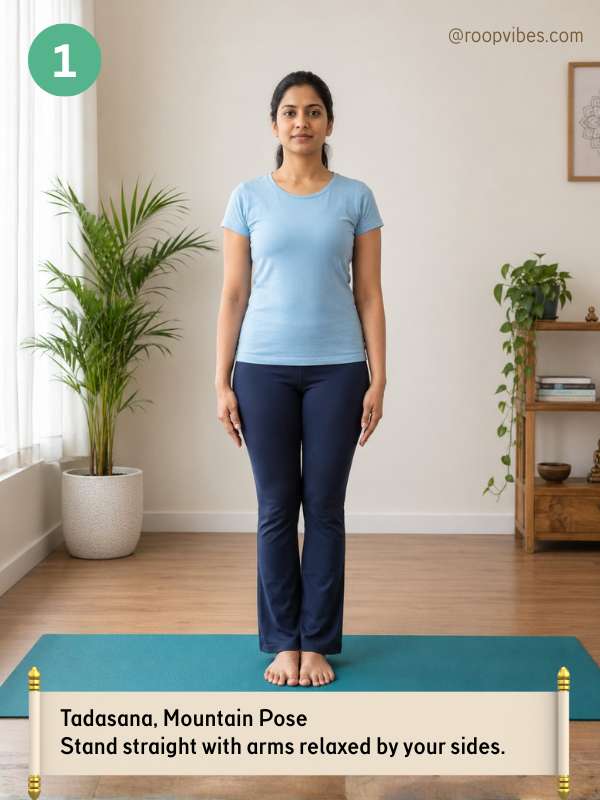
- Stand straight on a yoga mat with your feet together or slightly apart.
- Keep your toes pointing forward and place your body weight evenly on both feet.
- Let your arms rest naturally beside your body, with palms facing inward.
- Keep your knees straight, but do not lock them tightly.
- Pull your shoulders slightly back and keep your chest open.
- Keep your spine straight, neck relaxed and chin parallel to the floor.
- Look straight ahead and breathe slowly through your nose.
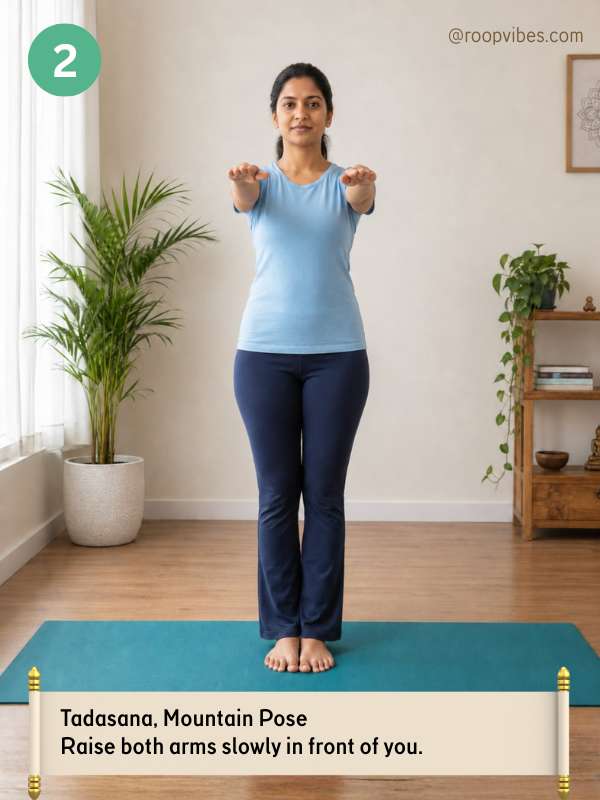
- Now raise both arms slowly in front of your body.
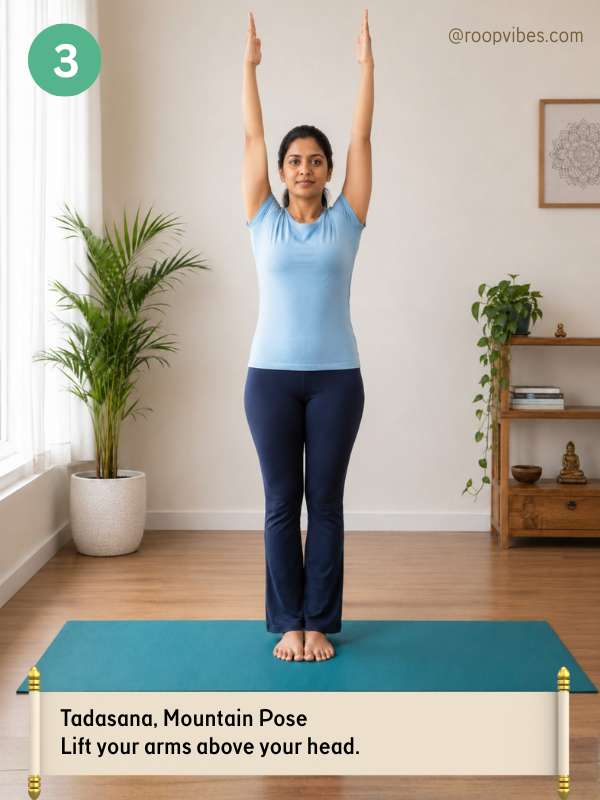
- Take your arms above your head, keeping them straight beside your ears.
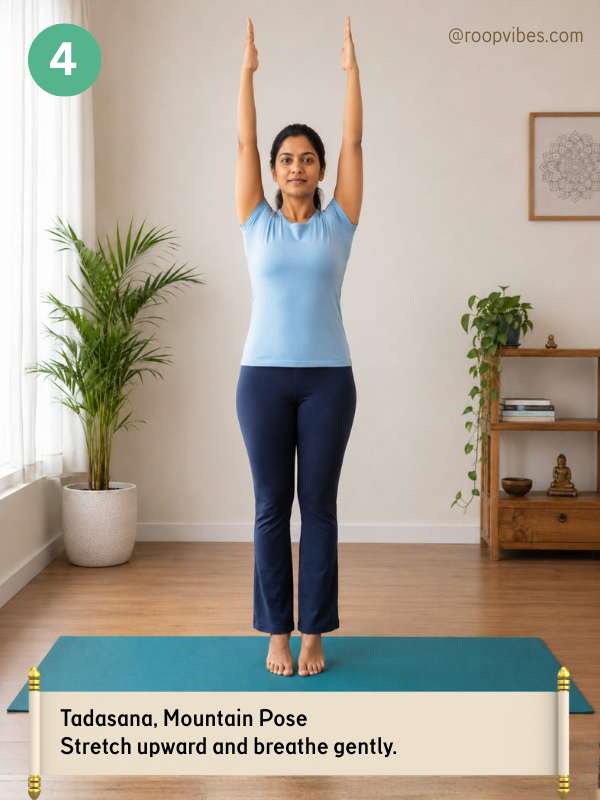
- Stretch your body upward gently from your feet to your fingertips.
- If comfortable, lift your heels and stand on your toes for a few seconds.
- Keep breathing normally and hold the pose for 15 to 30 seconds.
- Slowly bring your heels down first, then lower your arms.
- Relax for a few seconds before repeating the pose.
Benefits of Tadasana Yoga Poses
- Tadasana helps improve body posture by training the spine, shoulders, and neck to stay aligned. It is useful for people who sit for long hours or often stand with rounded shoulders.
- This pose also helps improve balance and body awareness. When you stand still and breathe slowly, you become more aware of how your feet, legs, and spine support the whole body.
- Tadasana gently stretches the body from the ankles to the fingers. It may help reduce stiffness in the legs, back and shoulders when done regularly.
Vrikshasana Yoga Asana (Tree Pose)
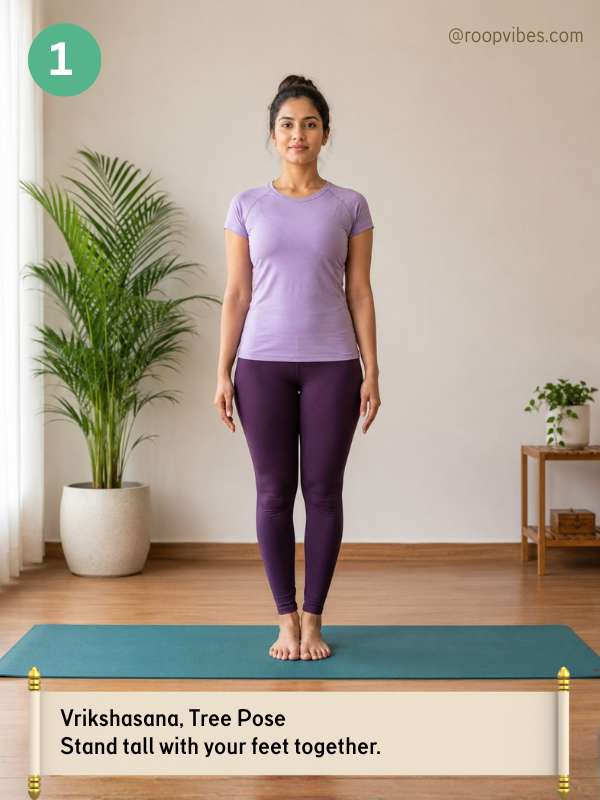
Vrikshasana, also called Tree Pose, is a standing balance pose. It teaches the body to stay steady on one leg, just like a tree stands firm on the ground. For beginners, this pose should be done slowly. A wall or chair can be kept nearby for support.
Vrikshasana Yoga Poses with Steps
- Stand straight in Tadasana with your feet together and arms by your sides.
- Keep your spine straight, shoulders relaxed and eyes looking forward.
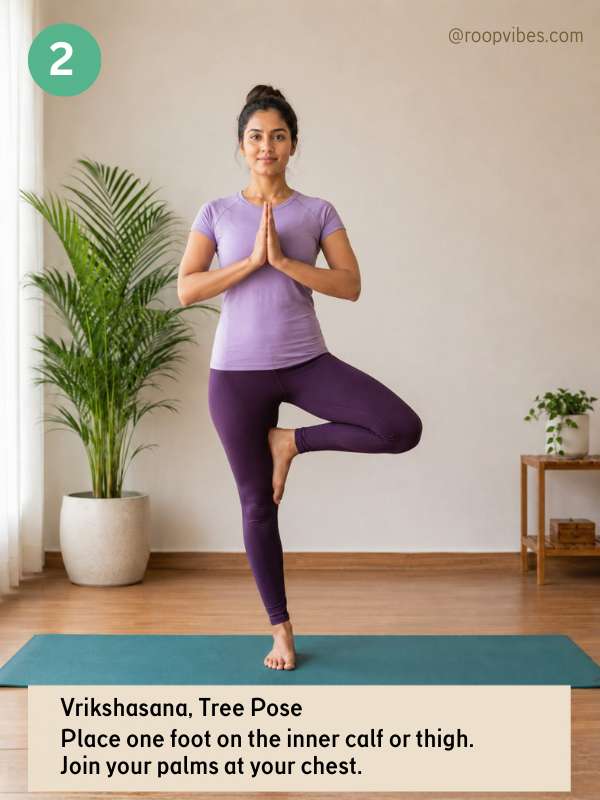
- Shift your body weight slowly onto your left foot.
- Bend your right knee and lift your right foot off the floor.
- Place the sole of your right foot on the inner side of your left calf or left thigh.
- Do not place the foot directly on the knee joint.
- Keep your left leg firm, but do not lock the knee tightly.
- Join both palms in front of your chest in Namaste position.
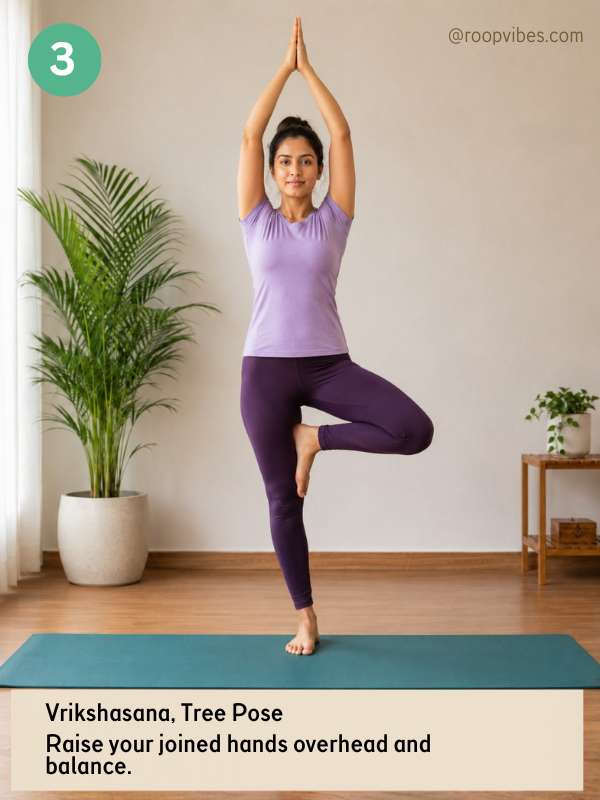
- Once you feel steady, slowly raise your joined hands above your head.
- Keep your body tall, chest open and breathing normal.
- Fix your eyes on one point in front of you to maintain balance.
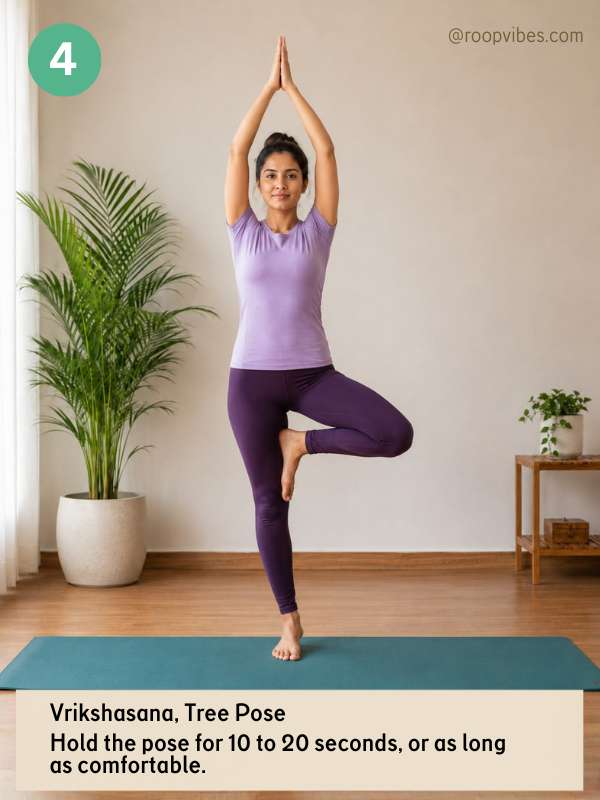
- Hold the pose for 10 to 20 seconds, or as long as comfortable.
- Slowly bring your hands back to your chest.
- Lower your right foot to the floor and return to Tadasana.
- Repeat the same steps on the other side.
Benefits of Tadasana Yoga Poses
- Vrikshasana helps improve body balance. This is very useful for beginners and older adults because steady balance supports safer daily movement.
- This pose strengthens the legs, ankles and feet. When one leg carries the body weight, the standing leg becomes more active and stable.
- Vrikshasana also helps improve focus. Looking at one fixed point while holding the pose trains the mind to stay calm and steady.
- It gently opens the hips and improves body awareness. You begin to notice how your feet, legs, spine and breath work together.
Trikonasana Yoga Asana (Tree Pose)
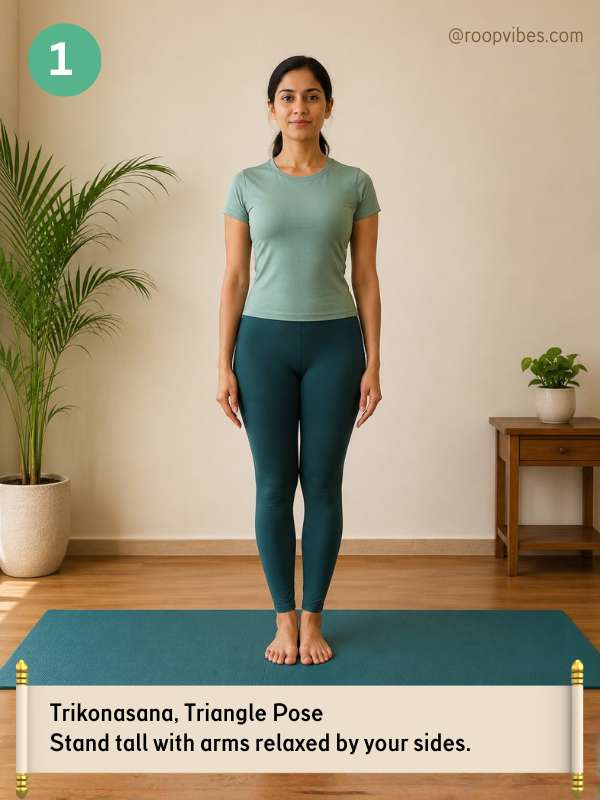
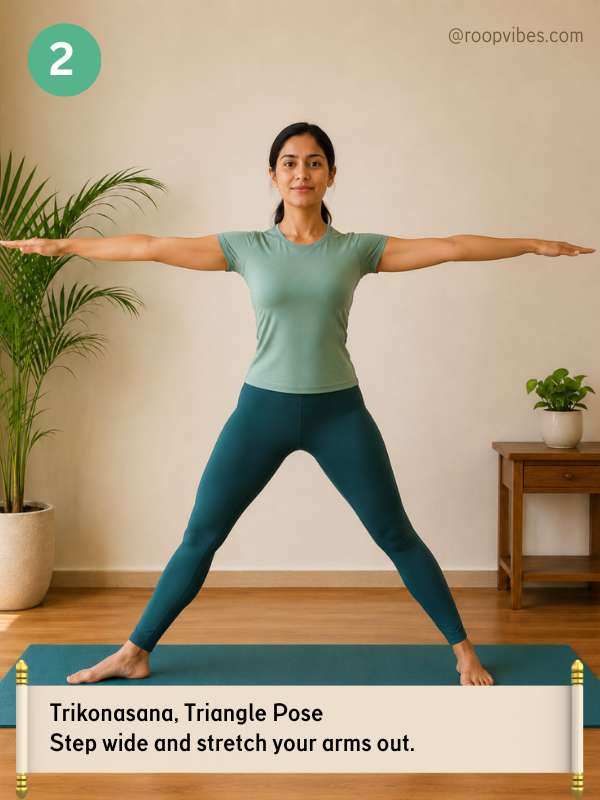
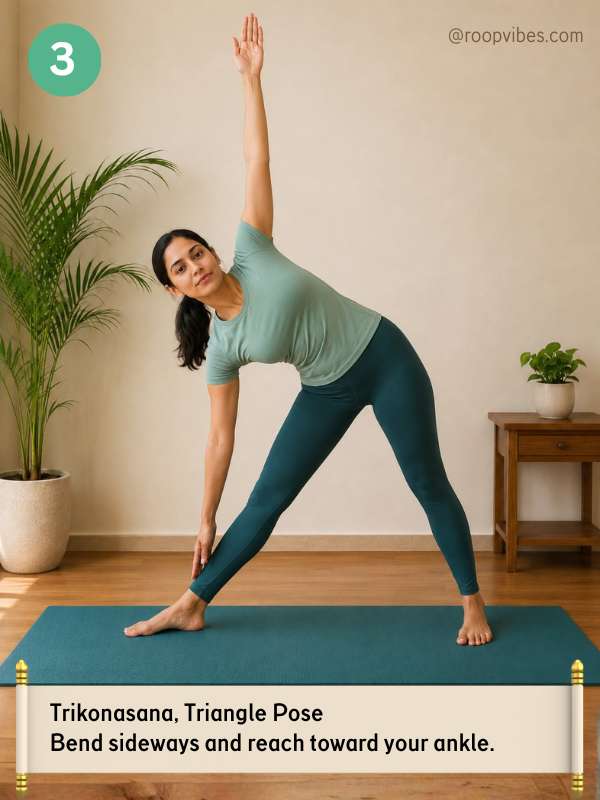
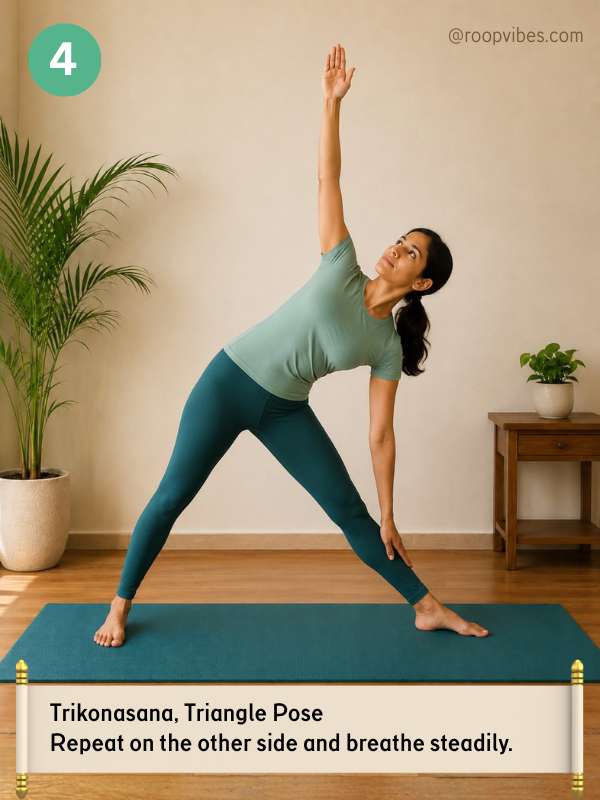
Trikonasana, also called Triangle Pose, is a standing yoga asana that stretches the sides of the body, legs, waist and spine. It is a useful pose for beginners because it improves flexibility without needing complex movement. The pose should be done slowly, with steady breathing and without forcing the hand to touch the floor.
Trikonasana Yoga Poses with Steps
- Stand straight in Tadasana with your feet together and arms by your sides.
- Keep your spine tall, shoulders relaxed and eyes looking forward.
- Step your feet wide apart, around 3 to 4 feet, depending on your comfort.
- Stretch both arms out to the sides at shoulder level, with palms facing downward.
- Turn your right foot outward to the right side.
- Keep your left foot slightly turned inward for balance.
- Keep both legs straight, but do not lock your knees tightly.
- Inhale and lengthen your spine.
- Exhale slowly and bend your upper body to the right side from the waist.
- Bring your right hand toward your right ankle, shin or the floor.
- Stretch your left arm upward, keeping both arms in one straight line.
- Turn your head gently and look toward your left hand, only if your neck feels comfortable.
- Keep your chest open and avoid leaning forward.
- Breathe normally and hold the pose for 10 to 20 seconds.
- Inhale and slowly come back to the standing position.
- Repeat the same steps on the left side.
Benefits of Trikonasana Yoga Poses
- Trikonasana helps stretch the waist, sides of the body, thighs, calves and shoulders. This makes it useful for people who feel stiff after sitting for long hours.
- This pose may help improve spine flexibility. The side bending movement gently works on the back and waist muscles.
- Trikonasana also helps strengthen the legs. Since both feet stay firm on the ground, the thighs, knees and ankles remain active during the pose.
- It may support better posture by opening the chest and encouraging the spine to stay long.
Vajrasana Yoga Asana (Diamond Pose)
Vajrasana, also called Diamond Pose, is a simple seated yoga asana. It is done by sitting on the heels with the spine straight. This pose looks easy, but it helps the body settle down after standing asanas. Beginners should be gentle with the knees and ankles while doing it.
Vajrasana Yoga Poses with Steps
- Sit on a yoga mat with your legs stretched in front of you.
- Bend your right knee and bring your right foot back beside your hip.
- Bend your left knee and bring your left foot back beside your hip.
- Keep both knees close together or slightly apart, based on comfort.
- Place the tops of both feet flat on the mat.
- Slowly lower your hips and sit on your heels.
- Keep your big toes close to each other behind you.
- Place your palms gently on your thighs or knees.
- Keep your spine straight, but do not make your body stiff.
- Keep your shoulders relaxed and chest open.
- Look straight ahead or gently close your eyes.
- Breathe slowly through your nose.
- Hold the pose for 30 seconds to 2 minutes, based on comfort.
- To come out, lean slightly forward and lift your hips.
- Stretch your legs forward and relax your knees and ankles.
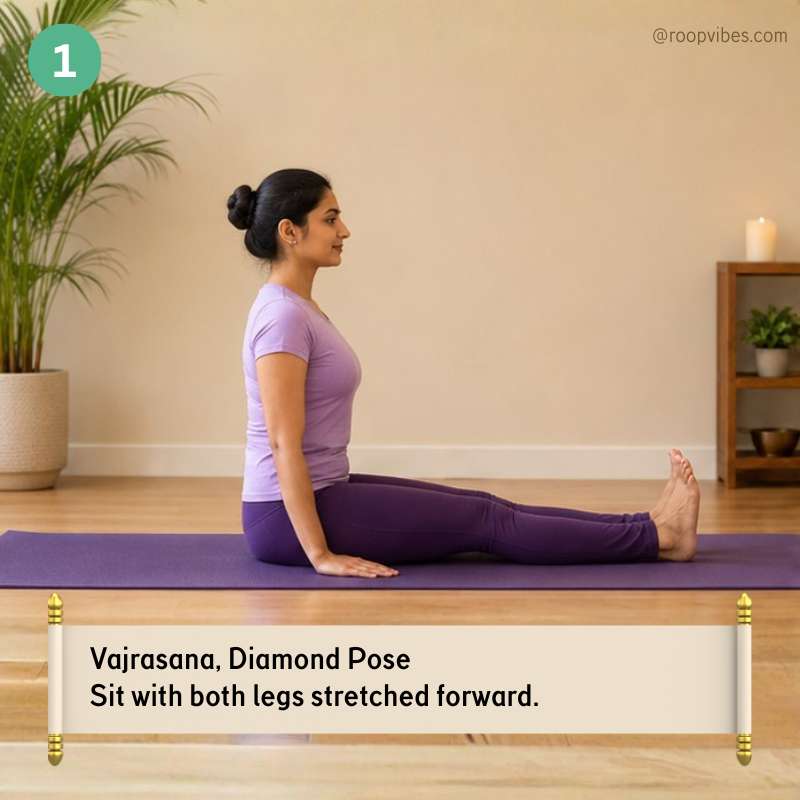
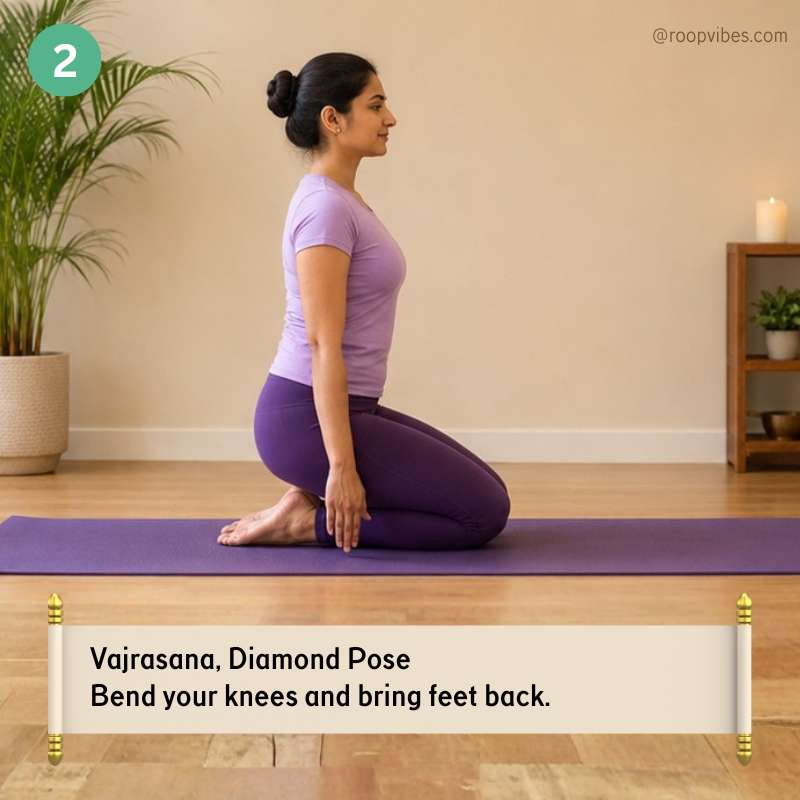
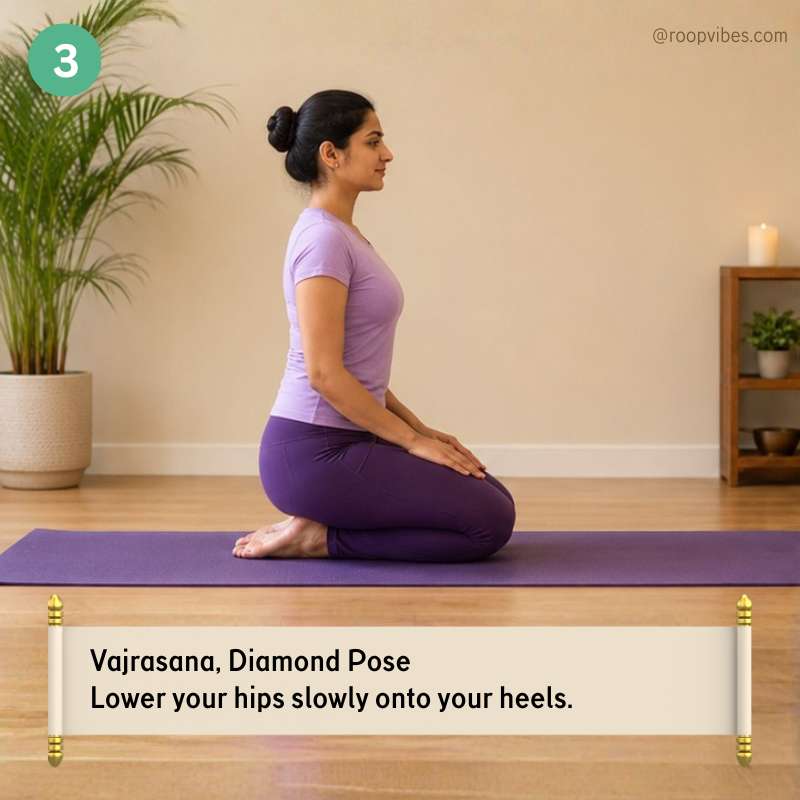
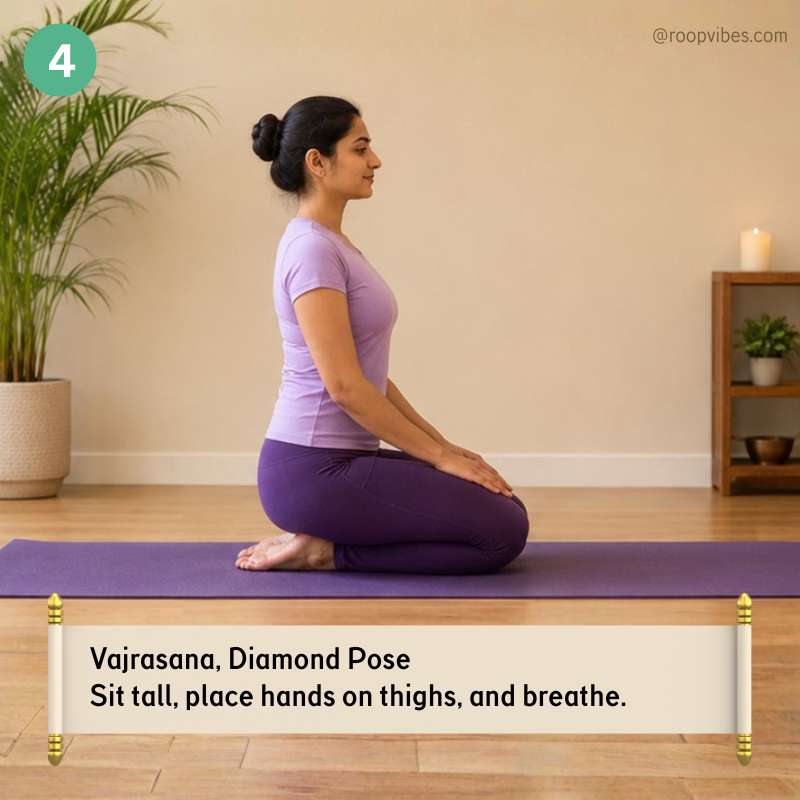
Benefits of Vajrasana Yoga Poses
- Vajrasana helps the body rest after standing yoga poses. It allows the breath to slow down and the mind to feel calmer.
- This pose supports better posture because the spine stays straight while sitting. It may help people become more aware of how they sit during the day.
- Vajrasana gently works on the thighs, knees, ankles and feet. With regular practice, it may improve comfort in simple seated positions.
- It is also a good pose for breathing practice. Since the body remains steady, beginners can focus more easily on slow breathing.
Balasana Yoga Asana (Child Pose)
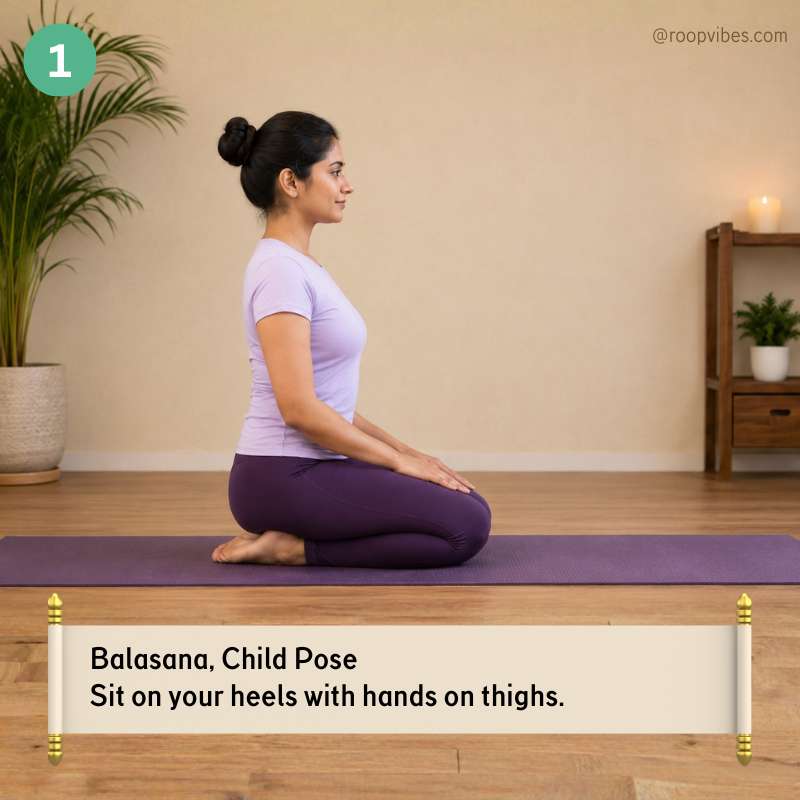
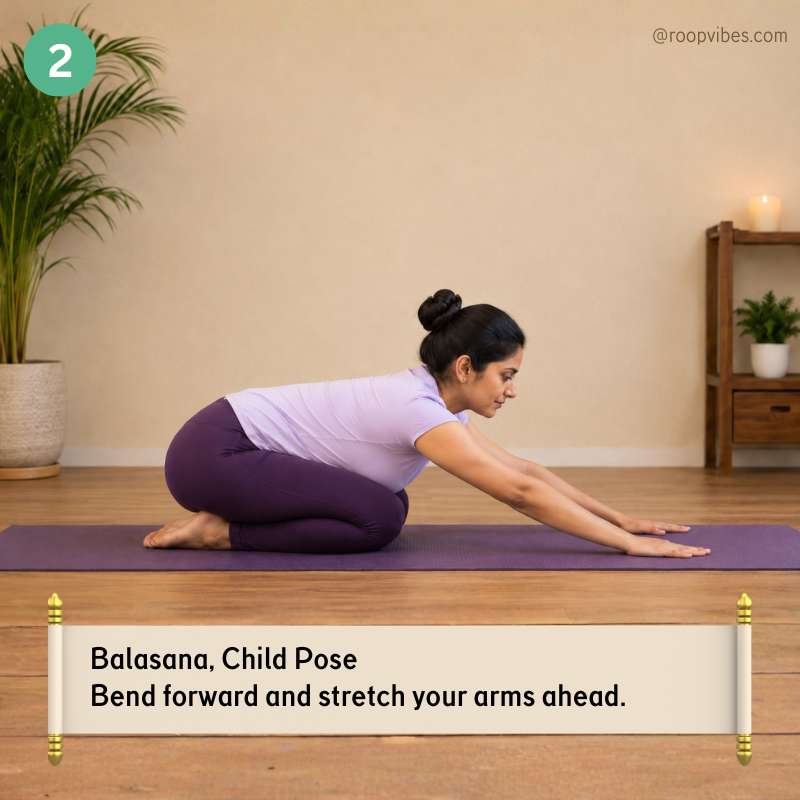
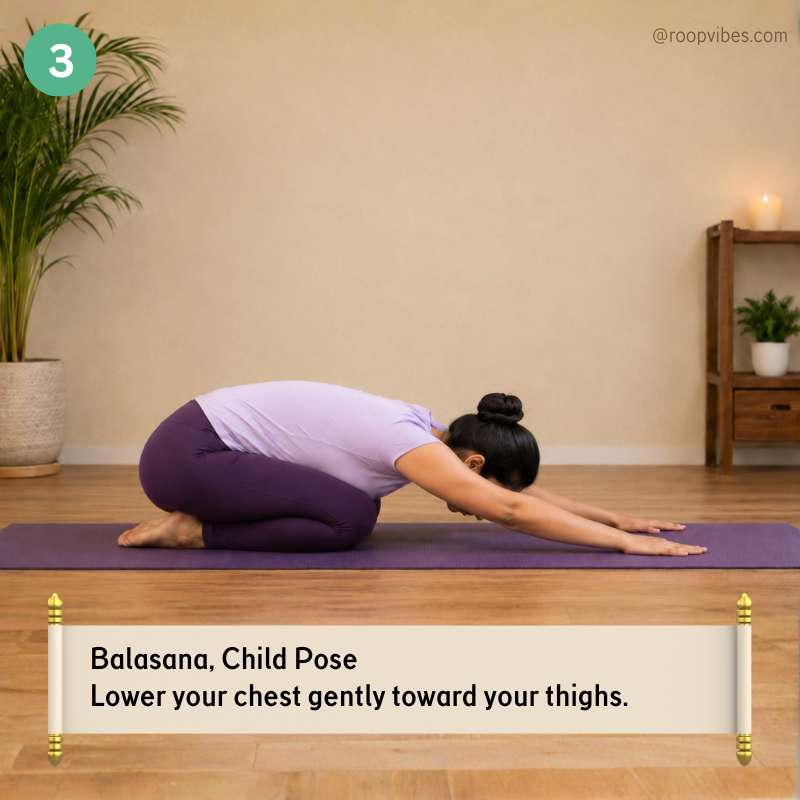
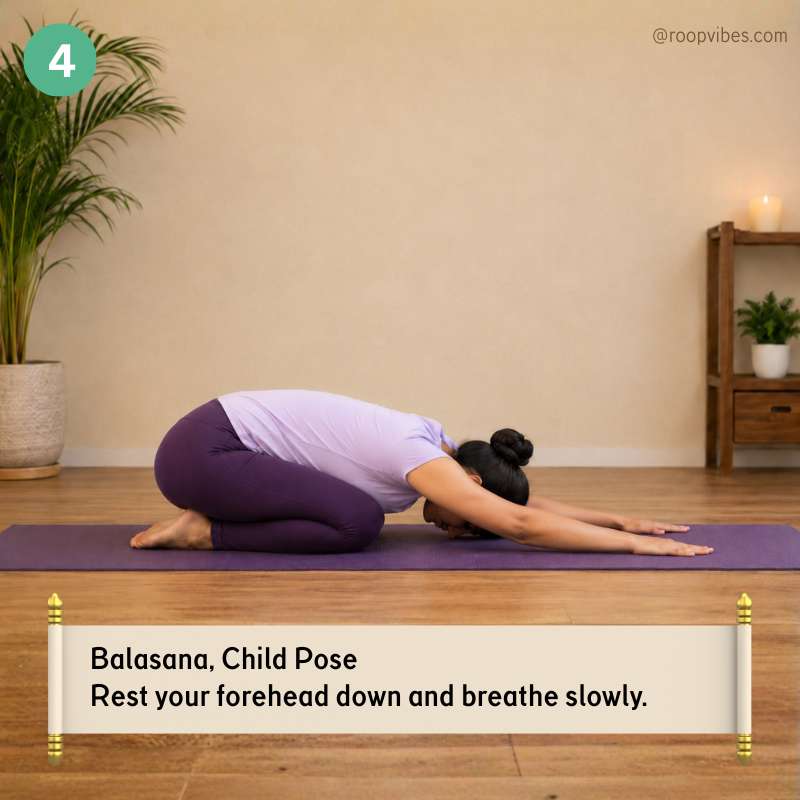
Balasana, also called Child Pose, is a gentle resting yoga asana. It is done by sitting on the heels and folding the upper body forward. This pose is useful for beginners because it gives the body a short break between other yoga asanas. It also helps calm the breath and relax the body during a home yoga routine.
Balasana Yoga Poses with Steps
- Sit on a yoga mat in Vajrasana, with your hips resting on your heels.
- Keep your knees together or slightly apart, based on your comfort.
- Place your palms gently on your thighs.
- Keep your spine straight and take a slow breath in.
- As you breathe out, slowly bend forward from your hips.
- Stretch both arms forward on the mat.
- Keep your palms facing down and your fingers relaxed.
- Lower your chest gently toward your thighs.
- Bring your forehead close to the mat.
- If comfortable, rest your forehead on the mat.
- Keep your shoulders loose and relaxed.
- Do not force your back, hips, knees or ankles.
- Breathe slowly and stay in the pose for 30 seconds to 1 minute.
- To come out, press your palms lightly into the mat.
- Slowly lift your chest and return to the sitting position.
- Sit quietly for a few seconds before moving to the next asana.
Benefits of Balasana Yoga Poses
- Balasana helps relax the back, shoulders and neck. It is useful after standing or stretching poses because it gives the body a gentle pause.
- This pose may help reduce stiffness around the lower back, hips and thighs. The forward fold allows the spine to rest in a soft and calm position.
- Balasana also supports slow breathing. When the body folds forward, many people find it easier to settle their breath and calm the mind.
- It is a good resting pose for beginners. If a yoga routine feels tiring, Balasana can be used as a short break before continuing.
Pavana Mukta Asana (Wind-Relieving Yoga Pose)
Pavana Mukta Asana, also called Wind-Relieving Pose, is a simple lying-down yoga asana. It is done by bringing one or both knees toward the chest while lying on the back. This pose is gentle and beginner-friendly. It is often used to relax the lower back and support easy movement around the stomach area.
Pavana Mukta Asana Yoga Poses with Steps
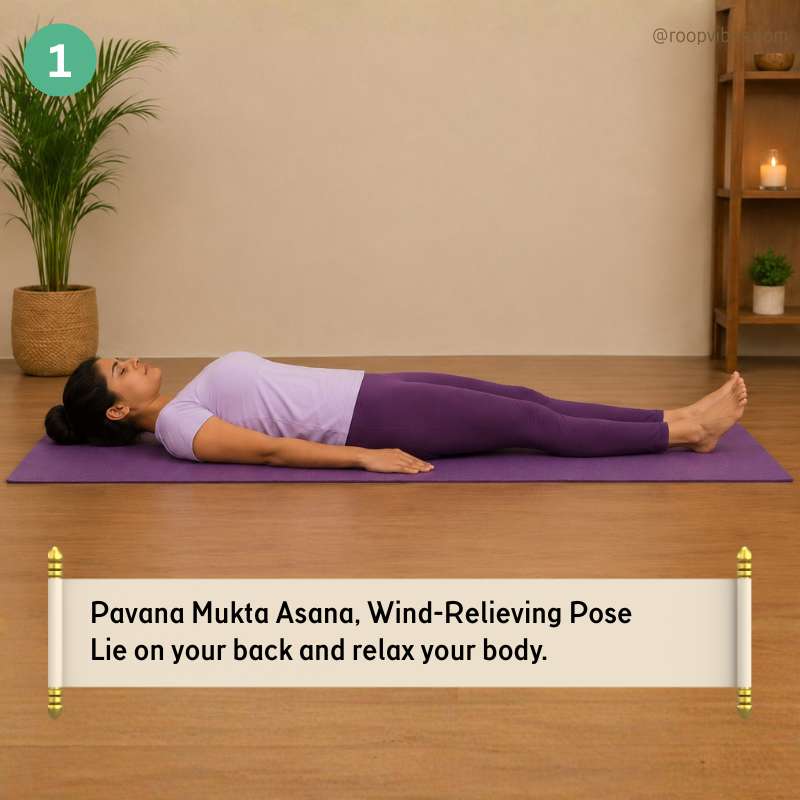
- Lie down on your back on a yoga mat.
- Keep both legs straight and close to each other.
- Let your arms rest beside your body.
- Keep your neck relaxed and look upward.
- Take one slow breath in.
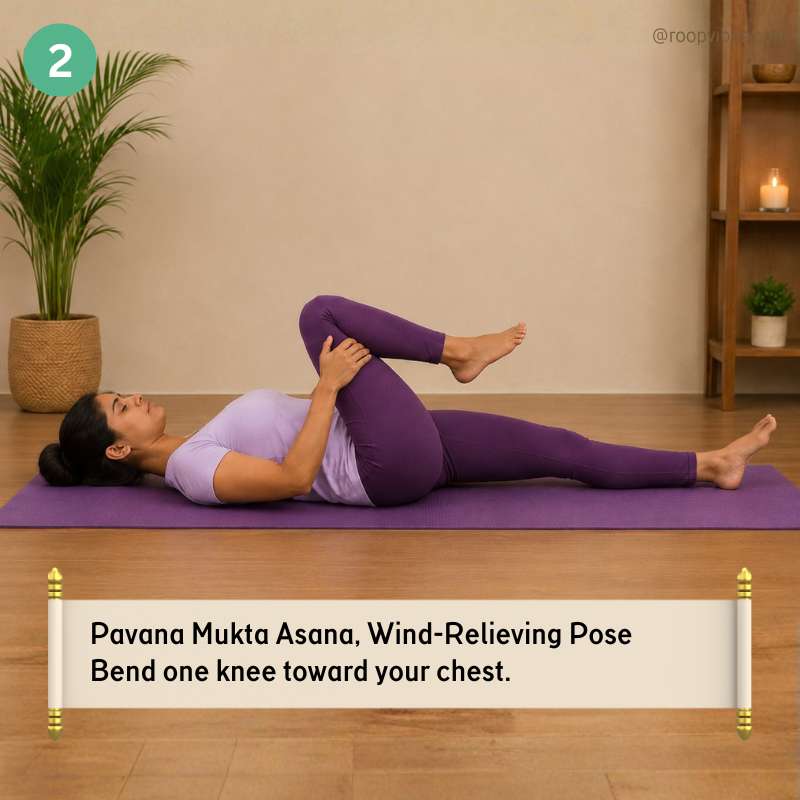
- As you breathe out, bend your right knee.
- Bring your right knee slowly toward your chest.
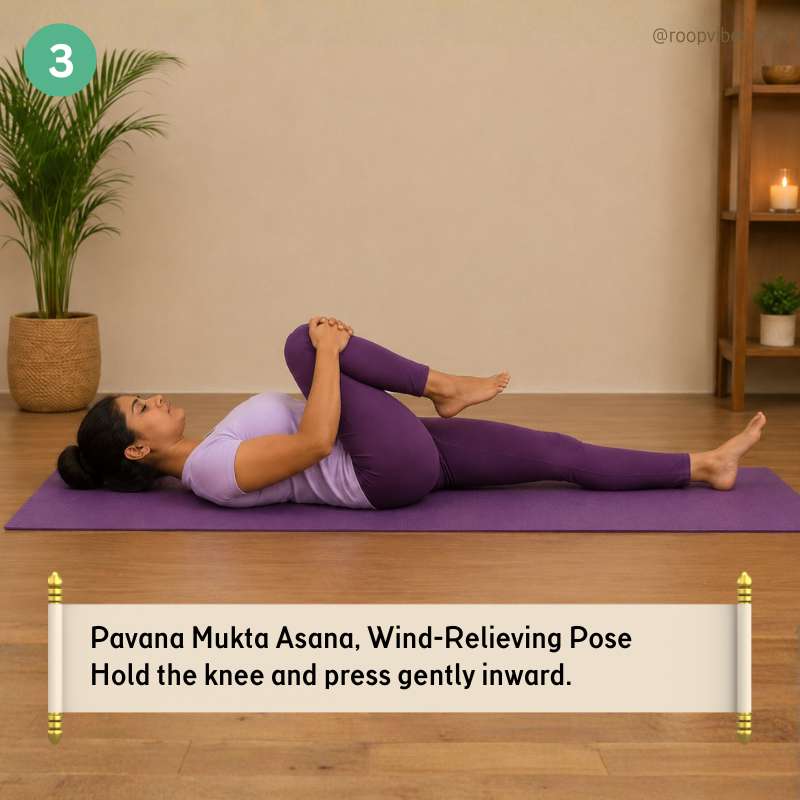
- Hold your right knee with both hands.
- Keep your left leg straight on the mat.
- Gently press the right thigh toward your stomach.
- Keep your shoulders relaxed and do not lift your upper body too much.
- Hold the pose for 10 to 20 seconds while breathing normally.
- Slowly release your hands and bring the right leg back to the mat.
- Repeat the same steps with your left leg.
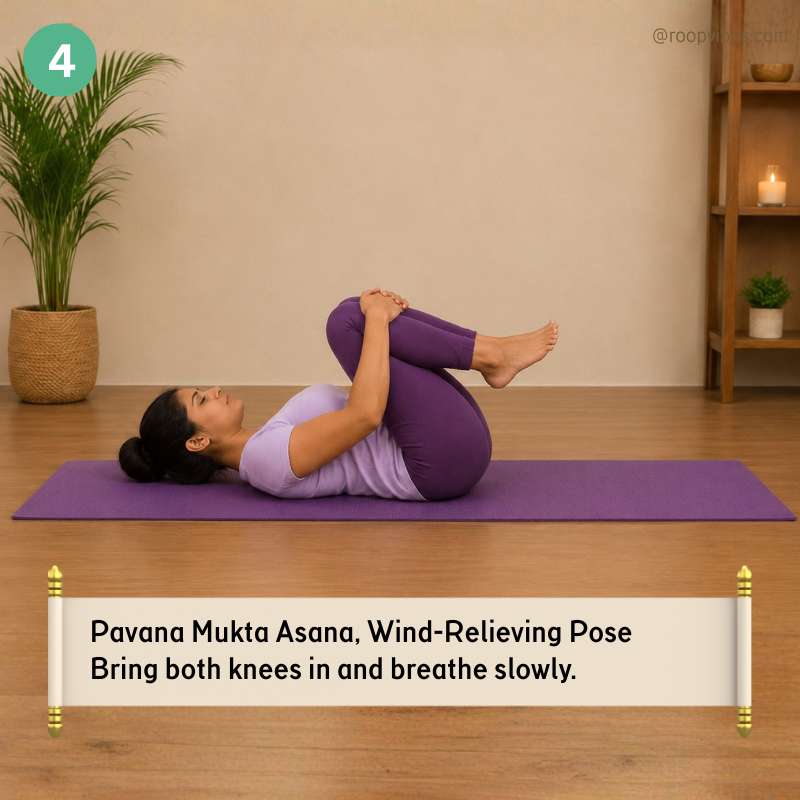
- After doing both sides, bend both knees together.
- Bring both knees toward your chest.
- Hold both knees with your hands.
- Gently press your thighs toward your stomach.
- Stay in this position for 10 to 20 seconds.
- Slowly release your legs and relax on your back.
Benefits of Pavana Mukta Asana Yoga Poses
- Pavana Mukta Asana gives a gentle stretch to the lower back. It may help people feel more relaxed after standing or sitting for a long time.
- This pose supports light movement around the stomach area. It may help ease gas and bloating, but it should not be treated as a cure for any health problem.
- It also helps relax the hips and thighs. When the knees come toward the chest, the lower body gets a soft stretch.
- Pavana Mukta Asana can help improve body awareness. Beginners learn how to move slowly with the breath while lying in a safe position.
- For healthy ageing, this pose is useful because it is simple, gentle and easy to do at home. It supports slow movement without putting pressure on balance.
- People with recent stomach surgery, pregnancy, severe back pain, hernia or serious neck pain should avoid this pose or ask a doctor first.
Bhujangasana Yoga Asana (Cobra Pose)
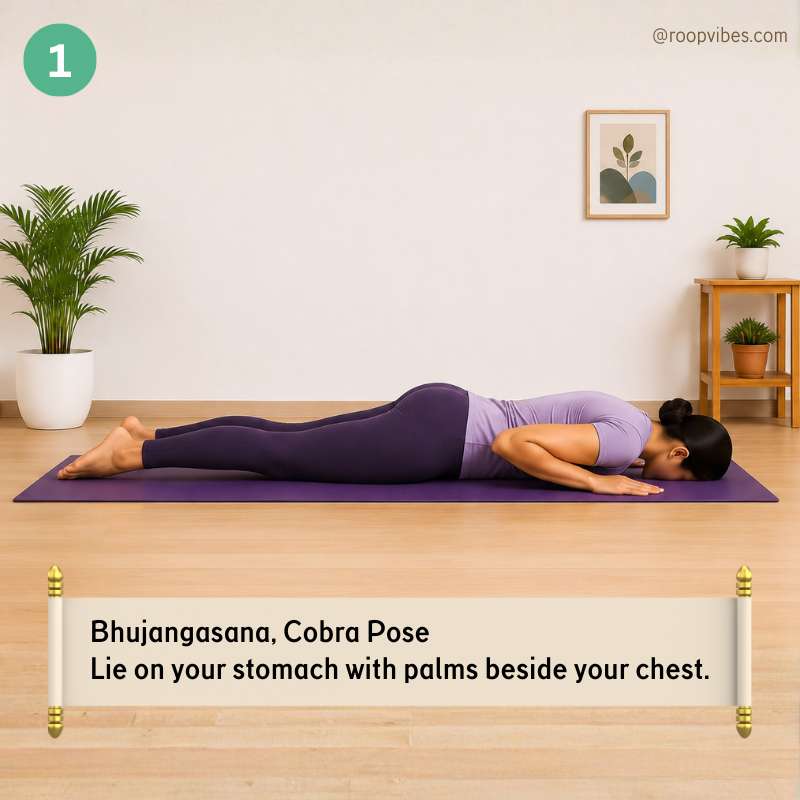
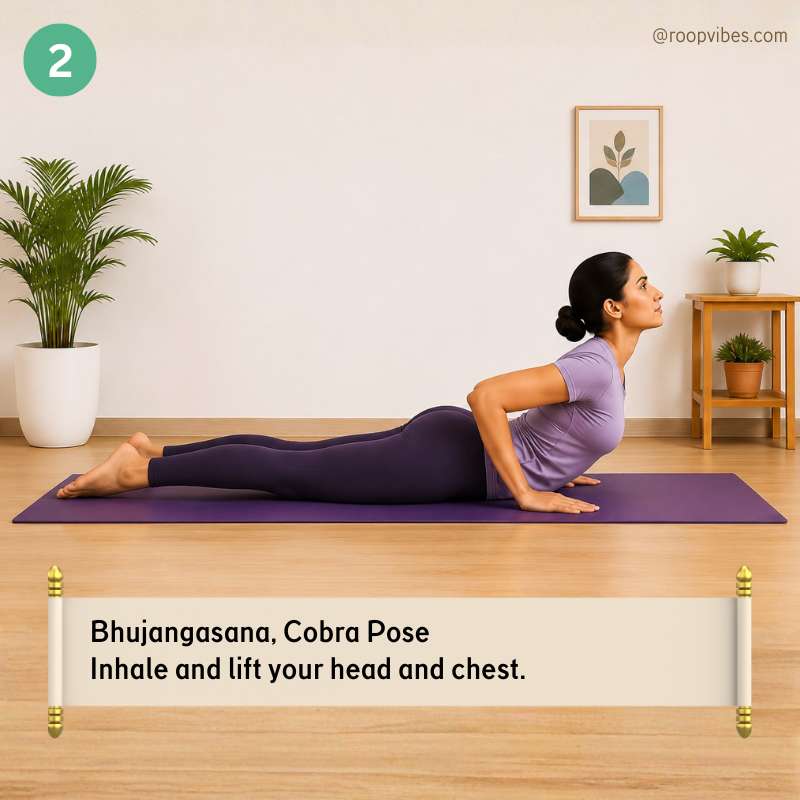
Bhujangasana, also called Cobra Pose, is a gentle back-bending yoga asana. It is done by lying on the stomach and lifting the head, chest and upper body like a cobra raising its hood. This pose is useful for beginners when done slowly and without forcing the lower back.
Bhujangasana Yoga Poses with Steps
- Lie down on your stomach on a yoga mat.
- Keep both legs stretched straight behind you.
- Keep your feet close together, with the tops of your feet resting on the mat.
- Place your palms on the mat beside your chest.
- Keep your elbows bent and close to your body.
- Rest your forehead or chin gently on the mat.
- Take a slow breath in.
- As you inhale, slowly lift your head and chest.
- Keep your lower body, hips and legs resting on the mat.
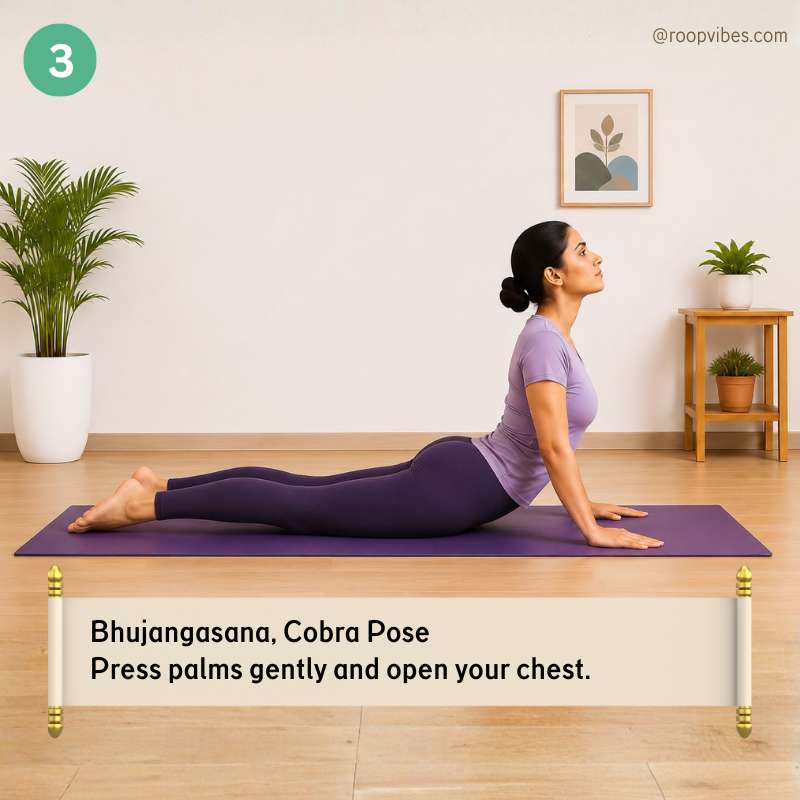
- Press your palms lightly into the mat, but do not push too hard.
- Keep your elbows slightly bent if you are a beginner.
- Pull your shoulders back gently and keep your chest open.
- Look forward or slightly upward, only if your neck feels comfortable.
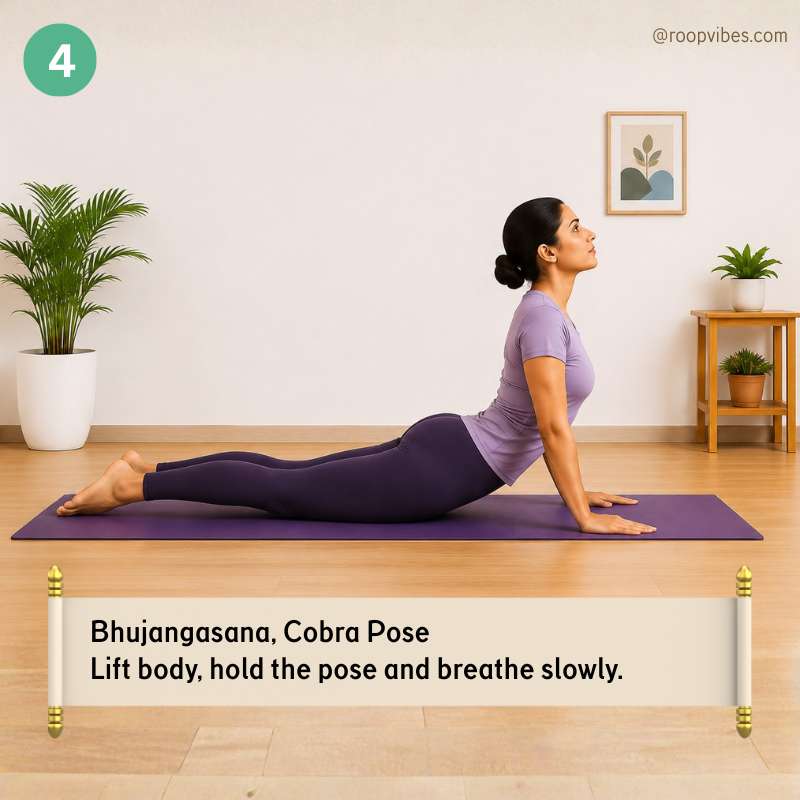
- Breathe normally and hold the pose for 10 to 20 seconds.
- As you breathe out, slowly lower your chest and head back to the mat.
- Relax your body for a few seconds before repeating.
Benefits of Bhujangasana Yoga Poses
- Bhujangasana gently stretches the chest, shoulders and abdomen. This makes it helpful for people who sit for long hours with rounded shoulders.
- This pose may support spine flexibility when done carefully. The gentle back bend helps the back move in a different direction from daily sitting and bending.
- Bhujangasana also helps open the chest. This can make breathing feel easier during a calm yoga routine.
- It may help strengthen the back muscles slowly. Beginners should keep the lift small and avoid pushing the body too high.
- For healthy ageing, Bhujangasana is useful because it supports posture, chest opening and gentle spinal movement. People with severe back pain, recent abdominal surgery, pregnancy or wrist pain should avoid this pose or take expert advice first.
Shalabhasana Yoga Asana (Locust Pose)
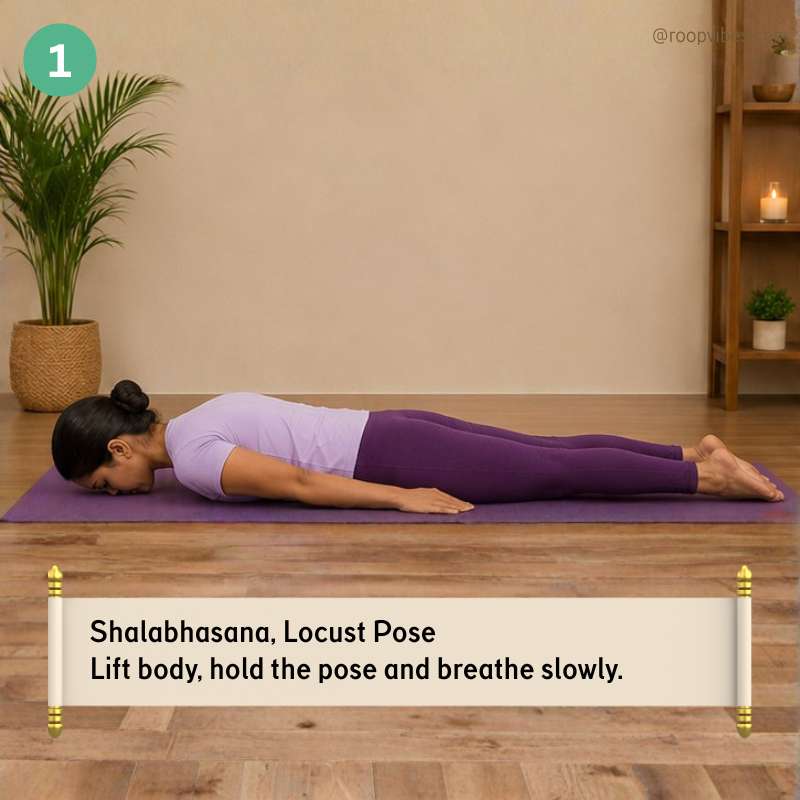
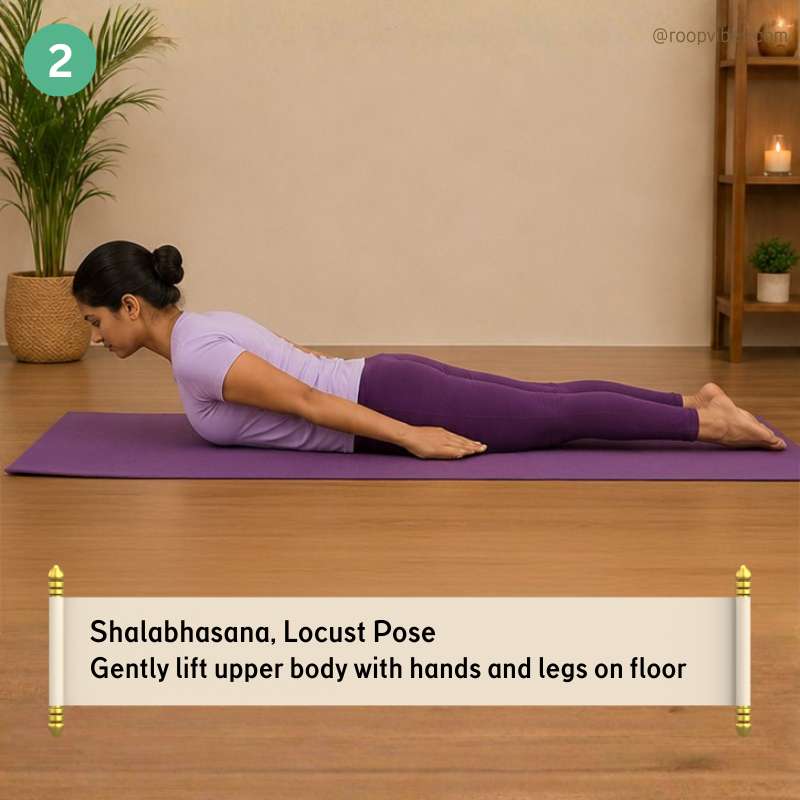
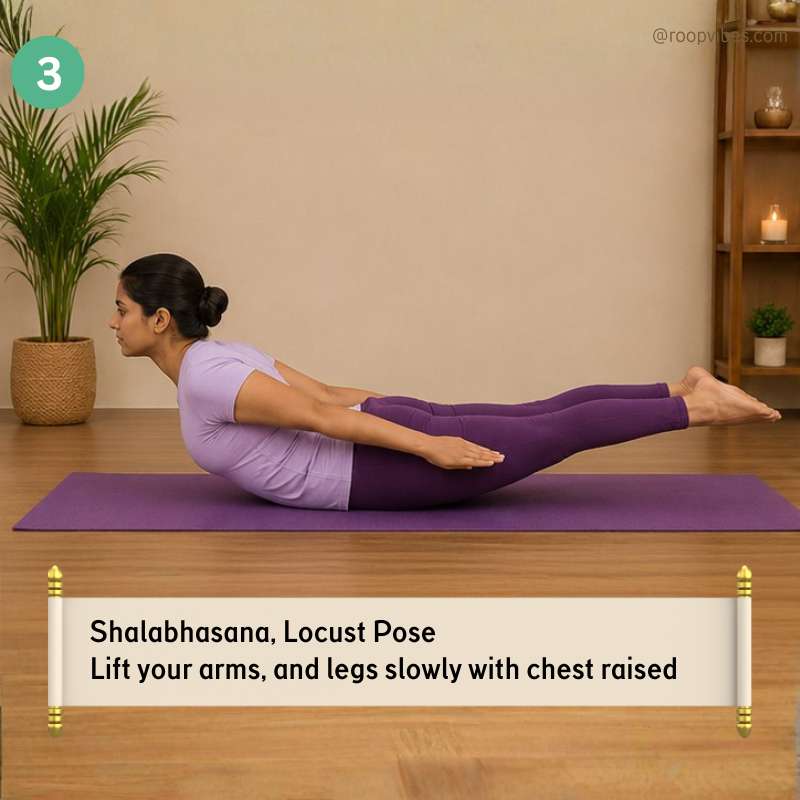
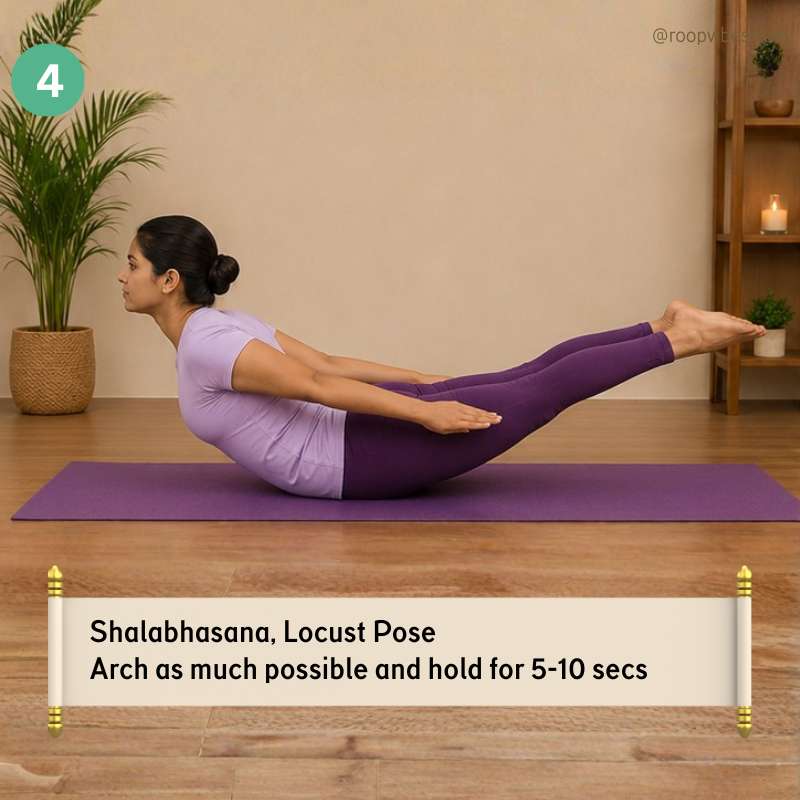
Shalabhasana, also called Locust Pose, is a prone yoga asana done while lying on the stomach. In this pose, the chest, arms and legs are lifted gently off the mat. It is useful for strengthening the back, hips and legs. Beginners should do a soft version first and avoid lifting too high.
Shalabhasana Yoga Poses with Steps
- Lie down on your stomach on a yoga mat.
- Keep both legs straight and close together.
- Stretch your feet back and keep the tops of your feet facing the mat.
- Place your arms alongside your body.
- Keep your palms facing downward or inward, close to your thighs.
- Rest your forehead or chin gently on the mat.
- Relax your shoulders and take a slow breath in.
- As you inhale, gently lift your head and upper chest a little off the mat.
- Keep your arms close to your body and do not bend your knees.
- Now tighten your back, hips and thigh muscles gently.
- Slowly lift both legs a little off the mat.
- If comfortable, lift your arms slightly as well, keeping them straight beside your body.
- Keep your chest open and look slightly forward, not too high.
- Breathe normally and hold the pose for 5 to 10 seconds.
- Do not strain your neck or lower back.
- As you breathe out, slowly lower your legs, chest and head back to the mat.
- Relax your whole body for a few seconds.
- Repeat the pose 2 to 3 times if comfortable.
Benefits of Shalabhasana Yoga Poses
- Shalabhasana helps strengthen the lower back, hips, buttocks and legs. This makes it a useful pose for people who want to build gentle body strength.
- It may help improve posture by making the back muscles more active. This can be useful for people who spend long hours sitting.
- This pose also opens the chest and works the shoulders. It helps the front and back of the body move together.
- Shalabhasana may support better body control because the pose needs slow lifting and steady breathing.
- For healthy ageing, this pose is helpful because it supports back strength, posture and controlled movement. People with severe back pain, hernia, recent abdominal surgery, pregnancy or serious neck problems should avoid this pose or take medical advice first.
Ardha Matsyendrasana Yoga Asana (Tree Pose)
Ardha Matsyendrasana, also called Half Spinal Twist, is a seated yoga asana. It is done by sitting with one leg bent and gently twisting the upper body to one side. This pose should be done slowly, without forcing the spine or neck. For beginners, a mild twist is enough.
Ardha Matsyendrasana Yoga Poses with Steps
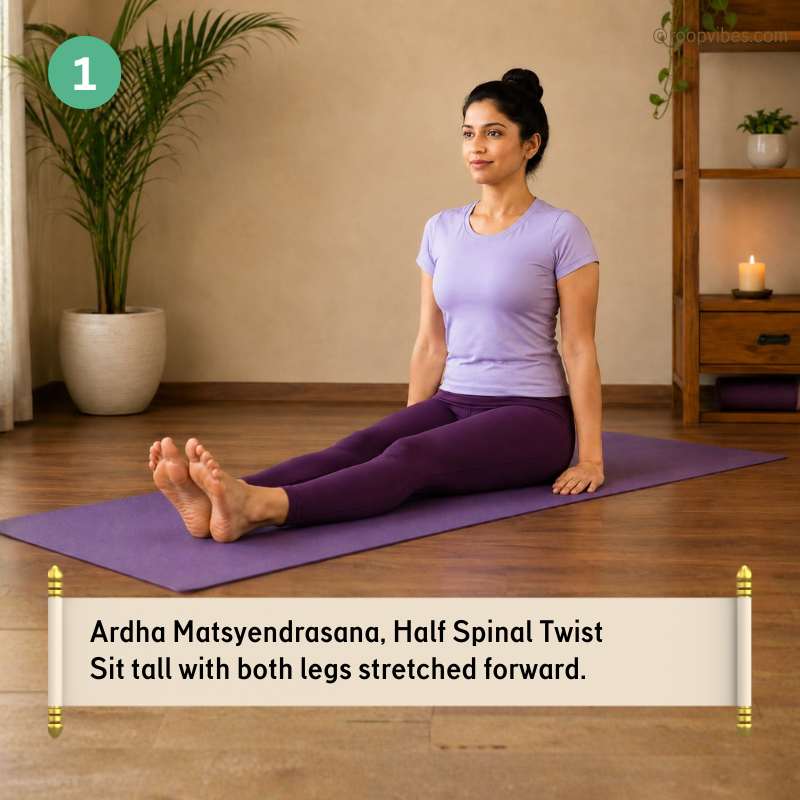
- Sit on a yoga mat with both legs stretched straight in front of you.
- Keep your spine straight and shoulders relaxed.
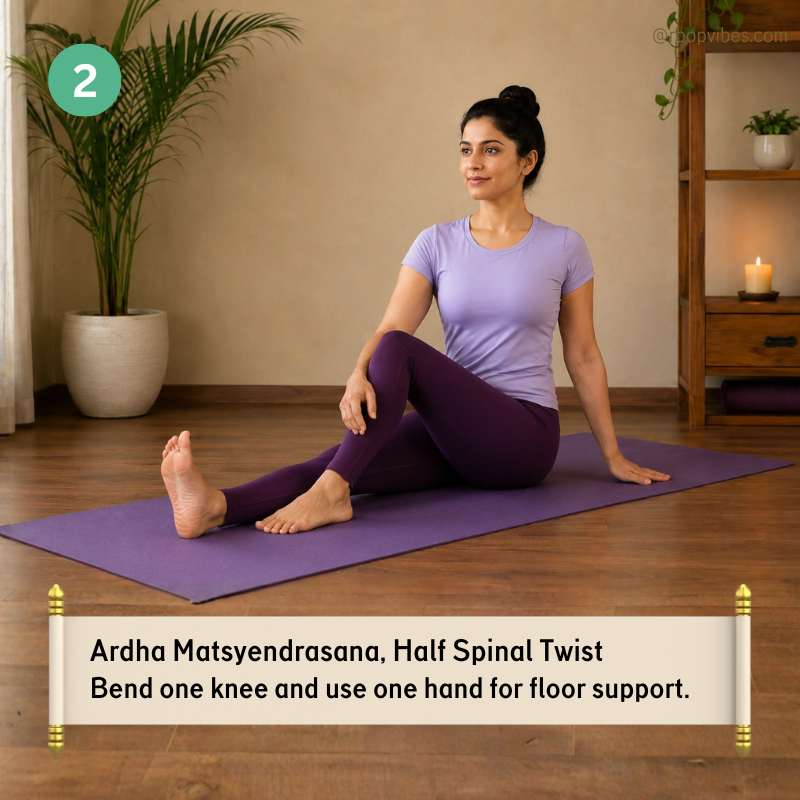
- Bend your right knee and place your right foot near the outside of your left thigh.
- Keep your left leg straight on the mat if you are a beginner.
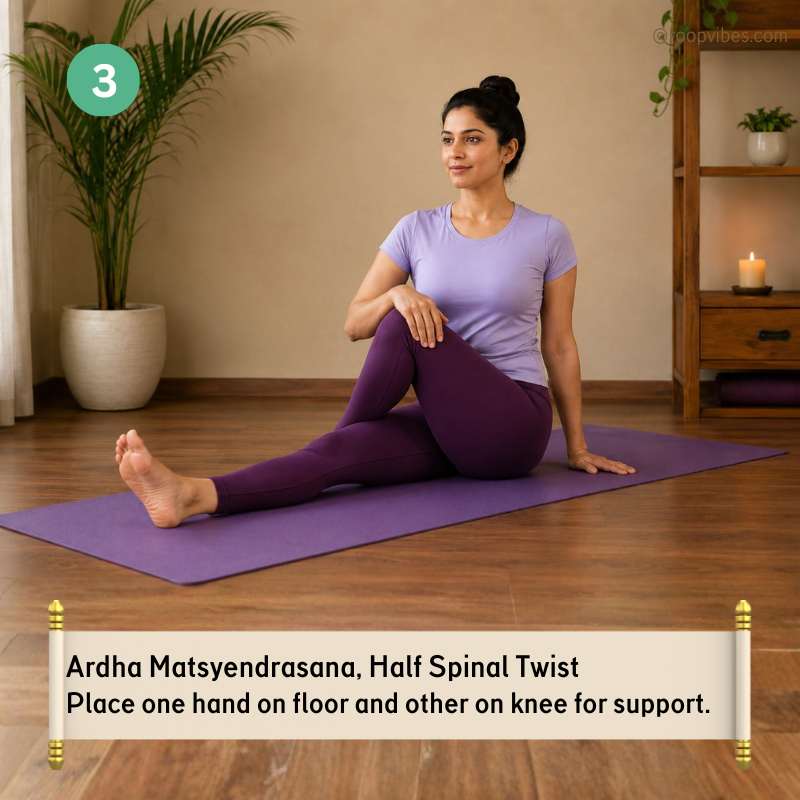
- Place your right hand on the floor behind your back for support.
- Take your left hand and place it gently on your right knee or right thigh.
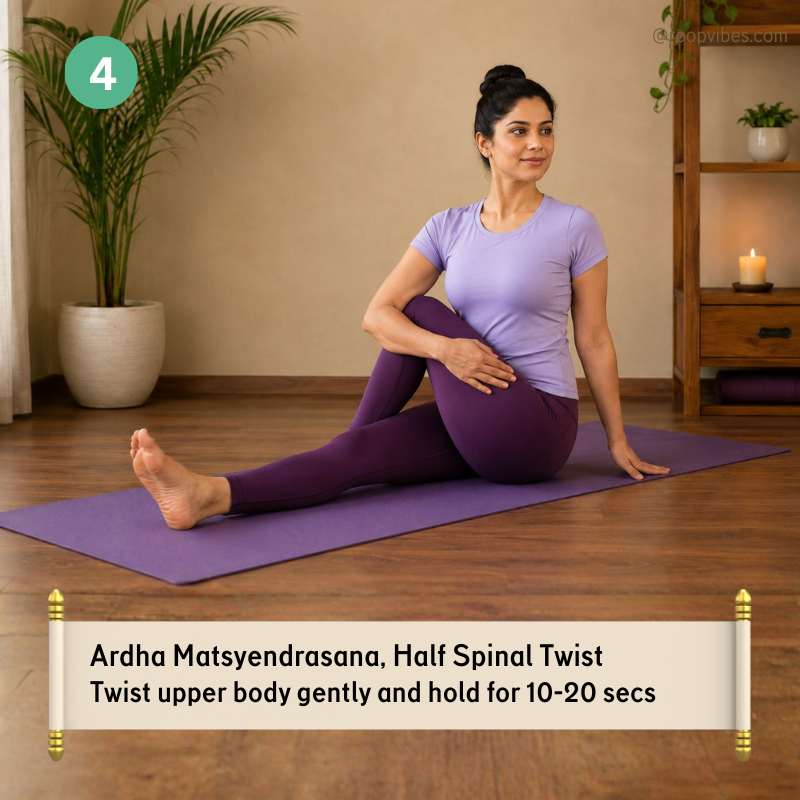
- Inhale slowly and lengthen your spine.
- As you breathe out, gently twist your upper body to the right.
- Turn your chest first, then your shoulders.
- Turn your head slightly to the right only if your neck feels comfortable.
- Do not force the twist or pull the knee too hard.
- Keep both sitting bones grounded as much as possible.
- Breathe normally and hold the pose for 10 to 20 seconds.
- Slowly return to the center.
- Stretch both legs forward and relax for a few seconds.
- Repeat the same steps on the other side.
Benefits of Ardha Matsyendrasana Yoga Poses
- Ardha Matsyendrasana helps improve spinal mobility. The gentle twist allows the back to move in a direction that is often missed in daily life.
- This pose may help reduce stiffness in the back, waist and shoulders. It is useful for people who sit for long hours.
- It also gives a gentle stretch to the hips and outer thighs. Beginners can keep one leg straight to make the pose easier.
- Ardha Matsyendrasana supports better posture because the spine stays tall during the twist.
- For healthy ageing, this asana is useful because it supports spine movement, seated balance and body awareness. People with severe back pain, slipped disc, recent abdominal surgery, pregnancy or serious hip pain should avoid this pose or take expert advice first.
Shavasana Yoga Asana (Corpse Pose)
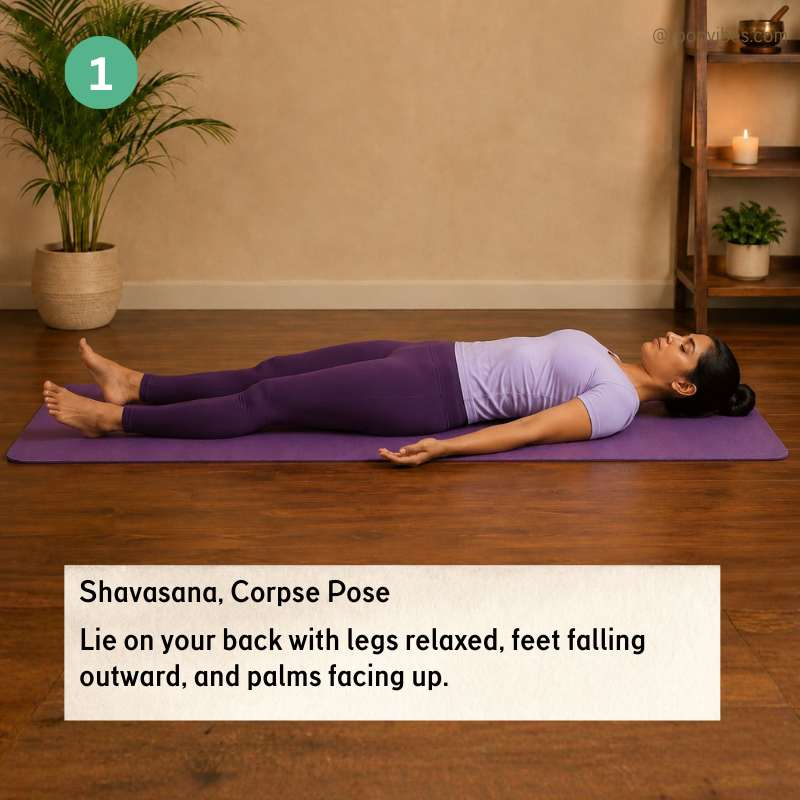
Shavasana, also called Corpse Pose, is a resting yoga asana done at the end of a yoga routine. It may look like simple lying down, but it teaches the body to relax fully while the mind stays calm and aware. This pose is important because it allows the body to settle after all other asanas.
Shavasana Yoga Poses with Steps
- Lie down on your back on a yoga mat.
- Keep both legs straight and relaxed.
- Let your feet fall slightly outward.
- Keep your arms beside your body.
- Place your palms facing upward.
- Keep a little space between your arms and the sides of your body.
- Rest your head comfortably on the mat.
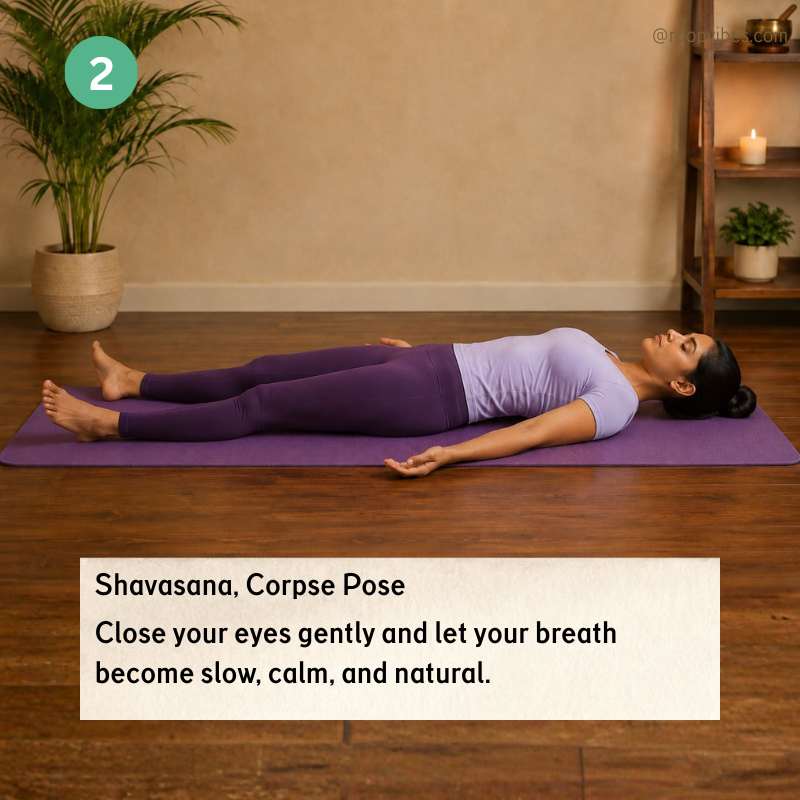
- Close your eyes gently.
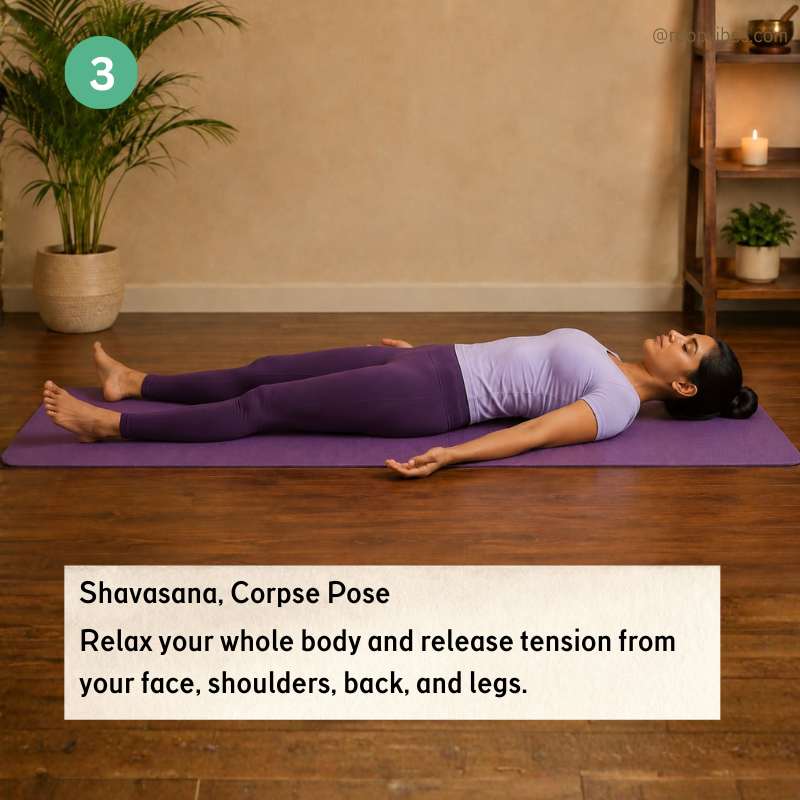
- Relax your face, jaw, shoulders and hands.
- Let your back, hips, legs and feet become soft and heavy.
- Breathe slowly and naturally through your nose.
- Do not try to control the breath too much.
- Stay still and allow the whole body to rest.
- Remain in the pose for 3 to 5 minutes, or longer if comfortable.
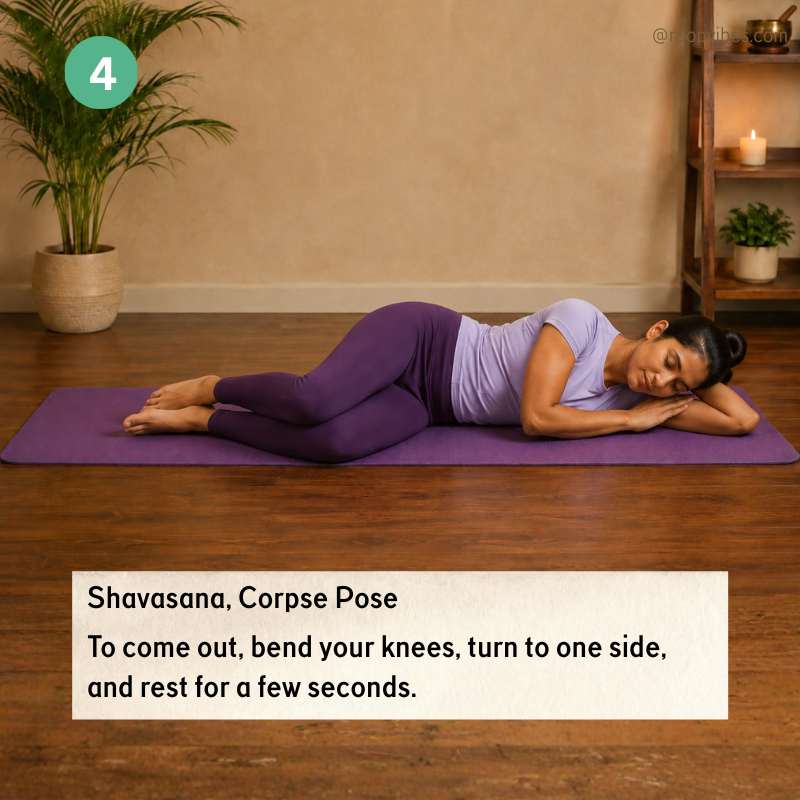
- To come out, slowly move your fingers and toes.
- Bend your knees gently.
- Turn to one side and rest there for a few seconds.
- Slowly come up to a sitting position.
- Sit quietly for a moment before opening your eyes fully.
Benefits of Shavasana Yoga Poses
- Shavasana helps relax the whole body after yoga practice. It gives the muscles time to release tension and settle down.
- This pose may help calm the mind. Since the body stays still, breathing becomes slower and the mind gets a chance to rest.
- Shavasana also supports better body awareness. You begin to notice tension in different parts of the body and slowly let it go.
- It is a useful pose after active asanas like Bhujangasana, Shalabhasana and Trikonasana. It helps bring the body back to a calm state.
- For healthy ageing, Shavasana is helpful because it supports rest, slow breathing and relaxation. People who feel discomfort while lying flat can keep a small folded towel under the knees or head.